Zoe Lorenz · 6 November 2026
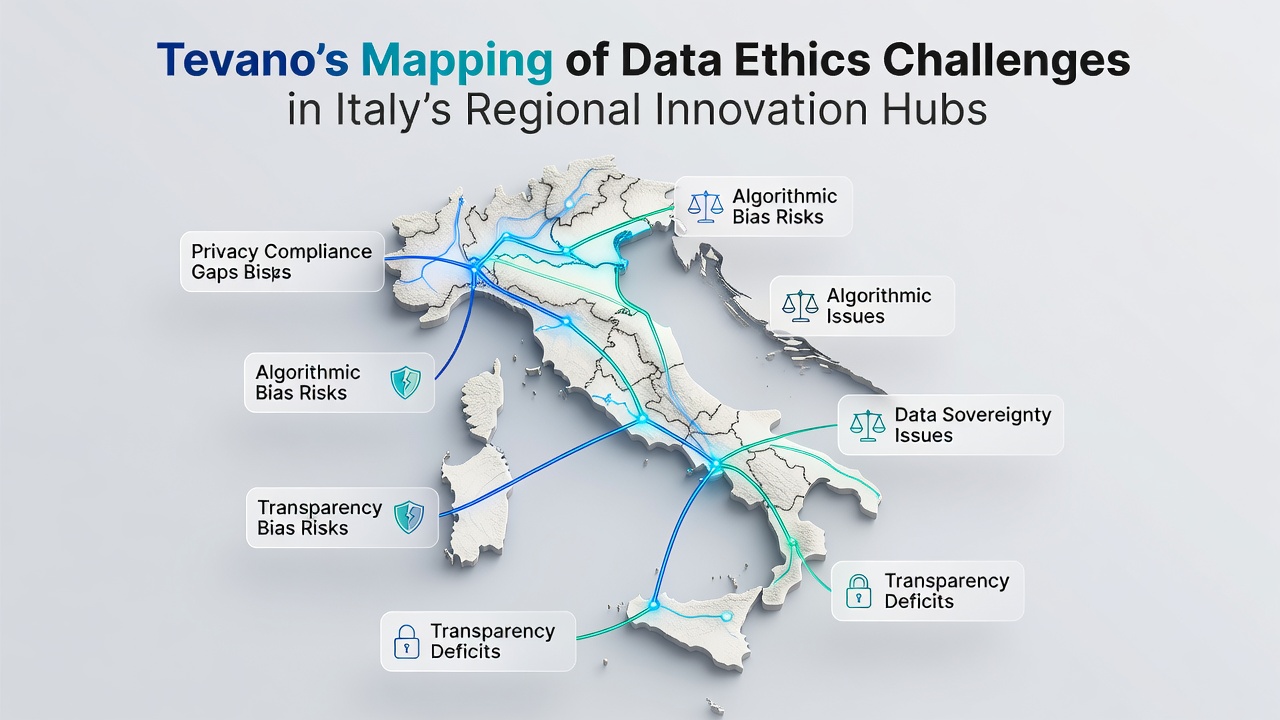
Tevano's Mapping of Data Ethics Challenges in Italy's Regional Innovation Hubs
Italy's regional innovation hubs have expanded rapidly over the past decade, with centers in Lombardy, Emilia-Romagna, and Piedmont leading efforts in artificial intelligence, biotechnology, and digital manufacturing. Tevano has conducted a systematic mapping of data ethics challenges across these locations, documenting issues related to consent protocols, cross-border data flows, and algorithmic accountability. The project draws on public records from regional authorities and aligns with ongoing implementations of the EU AI Act, which requires documentation of high-risk systems by mid-2026.
Regional Innovation Hubs and Their Data Practices
Observers note that each hub operates under distinct regulatory frameworks while sharing common infrastructure for data collection. In Lombardy, for instance, life-science clusters aggregate patient records from multiple hospitals, creating datasets that require careful handling under Italy's national privacy rules. Emilia-Romagna's manufacturing networks rely on sensor data from factory floors, where real-time processing raises questions about worker surveillance and retention periods. Piedmont's automotive research facilities integrate vehicle telemetry with urban planning models, producing combined datasets whose ownership remains unclear in joint public-private agreements.
Data shows that these practices have accelerated since 2023, when Italy allocated additional European recovery funds to digital transition projects. Figures from the Italian Ministry of Enterprise and Made in Italy indicate that more than 180 innovation contracts now include explicit data-sharing clauses, yet few specify ethics review procedures beyond basic GDPR compliance.
Key Challenges Identified in the Mapping
Tevano's analysis highlights several recurring patterns. Consent mechanisms often fail to account for secondary uses of data collected in one region and processed in another. Algorithmic bias testing remains inconsistent, particularly in predictive maintenance tools used by northern manufacturers. Cross-border transfers to non-EU partners lack standardized impact assessments, even though the Digital Services Act introduced new transparency requirements in 2024.
Researchers at the University of Bologna have documented similar gaps in a 2025 study on health data cooperatives, noting that regional variations in enforcement create uncertainty for organizations operating across multiple hubs. Tevano's mapping incorporates these findings alongside direct interviews with hub administrators, producing a comparative matrix that tracks ethics risks by sector and geography.
Methodology and Data Sources
The mapping combines quantitative indicators from public procurement records with qualitative assessments of governance documents. Analysts reviewed more than 320 project proposals submitted between 2022 and 2025, applying a standardized scoring system for consent clarity, audit frequency, and stakeholder notification procedures. External validation came from Italy's data protection authority, the Garante, which supplied anonymized enforcement statistics for the same period.
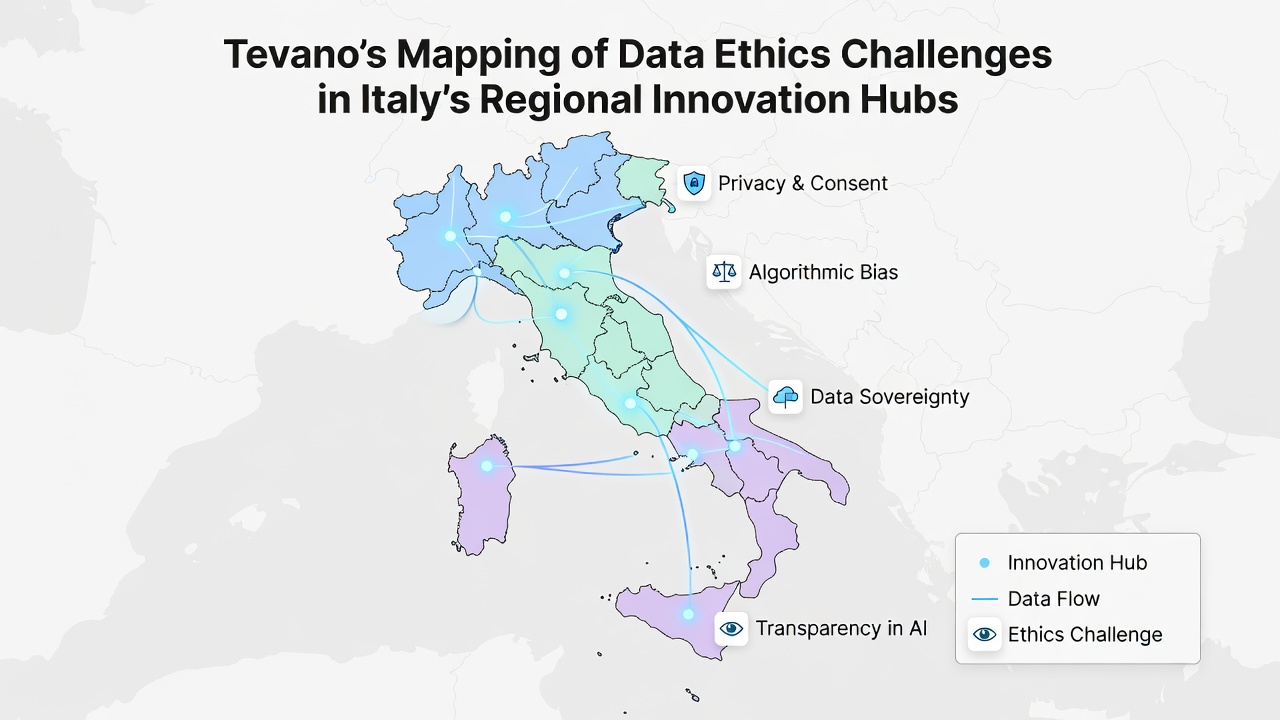
Additional context appears in reports from the European Data Protection Board, which track enforcement actions across member states. Tevano cross-referenced these figures with Canadian research on federated learning frameworks published by the University of Toronto, adapting evaluation criteria for Italian regulatory environments. The resulting dataset covers 14 innovation hubs and identifies 47 distinct ethics challenge categories.
Developments Expected in November 2026
Policy discussions scheduled for November 2026 at the Milan Innovation Summit will reference the completed mapping as a baseline for proposed regional ethics boards. Draft guidelines circulated by the Ministry of University and Research suggest that future funding applications may require documented ethics impact statements aligned with Tevano's categories. Regional authorities in Tuscany and Veneto have already begun pilot programs that test simplified review processes derived from the mapping outputs.
Industry associations such as Confindustria have participated in preliminary workshops, examining how the identified challenges intersect with supply-chain digitization targets set for 2027. These sessions focus on practical implementation rather than new legislation, emphasizing templates for data processing agreements that satisfy both national and EU standards.
Conclusion
Tevano's mapping provides a structured overview of data ethics issues currently present in Italy's regional innovation hubs. The work connects existing regulatory requirements with operational realities across multiple sectors, offering a reference point for organizations preparing compliance documentation ahead of the November 2026 policy discussions. Continued updates to the mapping will depend on new project data released by regional authorities and enforcement trends reported by the Garante.